





Creatine for Mental Sharpness: What Clinical Research Says About Brain Energy, Focus & Memory
Share
Creatine is best known for strength and performance — but clinical research is also exploring its role in brain energy, memory, focus and mental sharpness.
Most people think of creatine as a gym supplement. And yes, it is one of the most researched ingredients for supporting strength, power and high-intensity exercise performance.
But creatine also plays an important role in cellular energy production — including in the brain.
Your brain is highly energy-demanding. It relies on a steady supply of energy to support focus, attention, memory, processing speed and everyday mental performance. Creatine helps support the body’s natural phosphocreatine system, which assists with the rapid regeneration of ATP — the body’s main cellular energy source.
This is why creatine is gaining attention as a daily wellness ingredient for both body and mind.
What Is Creatine?
Creatine is a naturally occurring compound produced by the body and found in small amounts in foods such as red meat and fish.
It is stored mainly in muscles, but it is also present in the brain. In the body, creatine helps support energy production during times of increased demand.
For active people, this can mean support for:
- Strength
- Power
- Exercise performance
- Recovery
- Daily energy systems
- Cognitive performance support
Creatine does not work like caffeine. It is not a stimulant. Instead, it supports your body’s natural energy pathways over time.
How Creatine May Support Mental Sharpness
Mental sharpness is not one single thing. It includes a range of everyday cognitive functions such as:
- Focus
- Attention
- Memory
- Processing speed
- Mental stamina
- Clear thinking
- Cognitive performance under pressure
Because creatine supports cellular energy production, researchers have investigated whether supplementation may support brain function, particularly when the brain is under higher demand.
This may be relevant during:
- Busy work periods
- High study loads
- Training and performance phases
- Sleep restriction
- Mental fatigue
- Ageing
- Low dietary creatine intake
What Does the Clinical Research Say?
Clinical research suggests that creatine may support certain areas of cognitive performance, particularly memory, attention and processing speed.
Some studies indicate creatine may be especially useful when the brain is under increased energy demand, such as during sleep deprivation, ageing or mental fatigue.
Research has also explored creatine in people following vegetarian or plant-based diets, as these diets typically provide lower amounts of creatine from food.
The evidence is promising, but it should be positioned realistically. Creatine should not be described as a treatment for brain fog, cognitive decline, ADHD, dementia or any medical condition.
A responsible wellness position is:
Creatine supports cellular energy production and may help support mental performance, focus and memory as part of a healthy lifestyle.
Who May Benefit From Creatine for Brain Energy?
Creatine may be suitable for people who want daily support for both physical and mental performance.
It may be relevant for:
- Professionals with mentally demanding workloads
- Students during study periods
- Athletes and gym-goers
- Shift workers or people experiencing occasional sleep restriction
- Active adults wanting performance support
- Women looking to support strength, recovery and daily energy
- Older adults interested in maintaining strength and cognitive performance
- Vegetarians and vegans with lower dietary creatine intake
Creatine for Focus, Memory & Mental Performance
Creatine supports the body’s natural energy production systems. In the brain, adequate energy availability is important for normal cognitive performance.
This is why creatine is being studied for its potential role in:
Focus
Creatine may help support mental performance during periods of increased cognitive demand.
Memory
Clinical research suggests creatine may support memory performance, particularly in certain populations such as older adults or those with lower dietary creatine intake.
Processing Speed
Some research has found positive effects on information processing speed, especially in demanding conditions.
Mental Fatigue
Creatine may help support brain energy metabolism during periods of fatigue or sleep restriction.
Is Creatine a Stimulant?
No. Creatine is not a stimulant.
It does not act like caffeine and does not give a quick “wired” feeling.
Instead, creatine works by supporting your body’s natural energy systems over time. This makes it a useful daily ingredient for people who want performance and wellness support without relying solely on stimulants.
How Much Creatine Should You Take?
A common daily amount is:
3–5 g creatine monohydrate per day
For most people, consistency matters more than timing.
You can take creatine:
- With water
- In a smoothie
- With coffee
- In a protein shake
- After training
- With breakfast
- As part of your daily wellness routine
Some clinical studies use higher doses, but for general wellness use, 3–5 g per day is the most practical and commonly used approach.
Why Creatine Monohydrate?
Creatine monohydrate is the most researched form of creatine.
It is widely used because it is:
- Well studied
- Easy to use
- Versatile
- Cost-effective
- Suitable for daily supplementation
- Supported by extensive sports nutrition research
For most consumers, creatine monohydrate is the best starting point.
Final Thoughts from our Nutritionist
Creatine is more than a strength supplement.
It supports cellular energy production, physical performance and daily wellness. Emerging research also suggests it may support aspects of cognitive performance, including memory, attention and processing speed.
For people wanting to support both body and mind, creatine is a simple daily habit that fits easily into a modern wellness routine.
Take it consistently. Stay hydrated. Move daily. Sleep well. Support your body and your brain from the inside out.
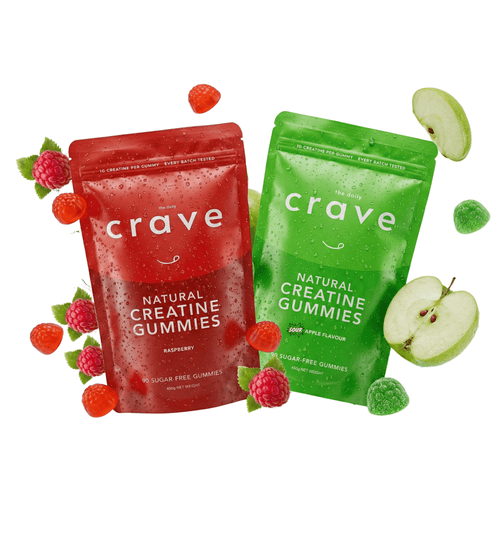
For a delicious alternative to powders - try our all natural and sugar free gummies.